
Why Yoga May Help You Sleep Better: Insights from Research, Viniyoga and Ayurveda

Have you ever gone to bed feeling exhausted, only to find yourself lying awake with a busy mind?
Sleep difficulties affect many people, particularly during times of stress, life transitions, hormonal changes, or simply the demands of modern living. While there is no single solution to sleep problems, a growing body of research suggests that yoga may help improve sleep quality and reduce some of the factors that interfere with restful sleep.
What I find particularly interesting as a Viniyoga teacher is that many of the mechanisms being explored by researchers today reflect principles that have been central to yoga and Ayurveda for centuries.
Sleep Problems Are Often About More Than Sleep
Modern sleep research increasingly views insomnia as a state of "hyperarousal."
In simple terms, the body and mind remain more alert than they need to be, even when it is time to rest. Stress hormones may remain elevated, muscles stay tense, breathing becomes less efficient, and the mind continues processing information long after the day has ended. Many people recognise this feeling. They are physically tired but unable to switch off. Rather than directly forcing sleep, yoga may help by addressing some of the conditions that contribute to this state of heightened alertness.
Several systematic reviews have found that yoga practices may improve sleep quality, particularly for people experiencing poor sleep, stress, anxiety, or insomnia symptoms. The improvements reported are generally modest rather than dramatic, but they’re consistent enough to suggest that yoga can be a valuable part of a broader approach to supporting healthy sleep.
This could be for several possible reasons:
Reduced stress and anxiety
Improved emotional regulation
Better management of physical tension
Increased body awareness
Changes in breathing patterns that support relaxation
Importantly, yoga is not a treatment for every sleep disorder, nor does it work in the same way for everyone. However, the evidence suggests that regular practice may help create conditions that make restful sleep more likely.
The Viniyoga Approach: Adaptation Rather Than Achievement
One of the defining principles of Viniyoga is that the practice should be adapted to the individual.
When someone is struggling with sleep, the goal is not to perform advanced postures or achieve physical milestones. Instead, the practice is designed to meet the person's current needs. For some people, this may involve gentle movement to release physical tension. For others, the focus may be on breathing practices that reduce mental agitation. For someone experiencing exhaustion, the most appropriate practice may be deep relaxation. This approach is particularly relevant when working with sleep difficulties because there is rarely a one-size-fits-all solution.
The question is not, "What is the best yoga practice for sleep?" The more useful question is, "What is preventing this person from resting well, and how can the practice address that?"
Why Breath Plays Such an Important Role
In Viniyoga, breath is often described as the bridge between body and mind.
Modern research is beginning to explore why breathing practices can have such a profound effect on our state of being. Slow, comfortable breathing appears to influence the autonomic nervous system and may support the body's natural relaxation response. In particular, breathing practices that gently lengthen the exhalation are often associated with reduced physiological arousal and a greater sense of calm.
This does not mean that breathing exercises "cure" insomnia. However, they may help reduce some of the mental and physical activation that makes sleep difficult. For many people, a few minutes of quiet breathing before bed can become a valuable transition between the demands of the day and the stillness of the night.
An Ayurvedic Perspective: Understanding Vata
Ayurveda offers a different but complementary way of understanding sleep difficulties.
From an Ayurvedic perspective, symptoms such as restlessness, racing thoughts, light sleep, anxiety, and feeling overwhelmed are often associated with an aggravation of Vata dosha. Vata is linked with movement, activity, change, and communication. These qualities are essential for creativity and adaptability, but when they become excessive, the mind and nervous system may struggle to settle.
The traditional Ayurvedic response is not to suppress these qualities but to balance them with their opposites:
Warmth
Stability
Grounding
Nourishment
Rhythm
Regularity
Many evening yoga practices naturally cultivate these qualities through slow movement, steady breathing, gentle forward bends, relaxation, and consistent routines. While Ayurveda and modern science use different languages, both recognise that rest is more likely when the system feels settled, supported, and safe.
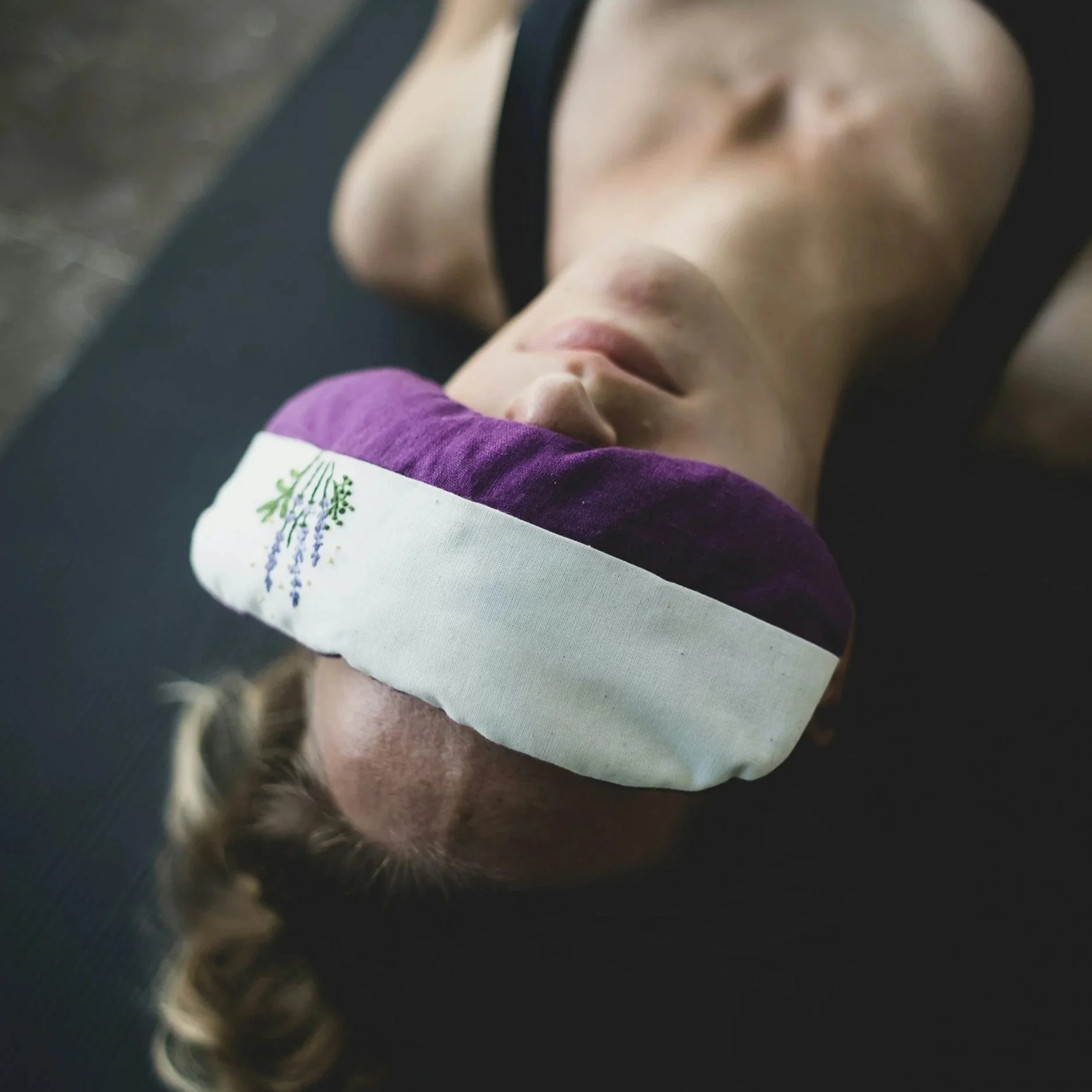
The Power of Yoga Nidra
One practice that deserves special mention is Yoga Nidra.
Often translated as "yogic sleep," Yoga Nidra guides practitioners into a state of deep relaxation while maintaining awareness. Recent research suggests it may improve sleep quality and reduce insomnia symptoms, although more high-quality studies are still needed. What makes Yoga Nidra particularly valuable is that it offers rest without requiring effort. Many people approach sleep as another task to accomplish. Yoga Nidra invites a different approach. Instead of trying harder, it encourages letting go. For individuals whose sleep difficulties are linked to stress, overthinking, or chronic busyness, this shift can be profoundly helpful.
This is one reason I include Yoga Nidra in my work at Steel City Yoga. Alongside regular classes, I run monthly Mini Yoga Retreats that combine gentle movement, breathwork, guided Yoga Nidra, reflective journaling, and time for quiet reflection. These 90-minute sessions are designed to create space for deep rest and nervous system recovery, offering a practical way to experience the restorative qualities discussed in both yoga tradition and modern sleep research. The retreats are open to all levels and are held monthly in Sheffield.
You can find details of upcoming Mini Yoga Retreats here:
Creating Conditions for Better Sleep
One of the most consistent findings in sleep research is the importance of regular habits and routines. Both Ayurveda and Viniyoga place great value on rhythm.
A simple evening practice might include:
Ten minutes of gentle breath-led movement
A few minutes of slow, comfortable breathing
Reducing screen exposure before bed
A short Yoga Nidra practice
Going to bed at roughly the same time each night
These practices do not guarantee perfect sleep. What they can do is create an environment in which sleep is more likely to arise naturally.
Final Thoughts
Sleep cannot be forced.
The harder we try to make ourselves fall asleep, the more awake we often become. Instead, both modern sleep science and traditional yoga teachings point towards a different approach: creating the conditions that allow rest to emerge naturally.
Yoga does not offer a quick fix for sleeplessness. What it can offer is a way to reduce some of the factors that commonly interfere with sleep: physical tension, mental overactivity, stress, irregular routines, and disconnection from the body's natural rhythms. From a Viniyoga perspective, the key is not finding the perfect technique but finding the right practice for the individual. From an Ayurvedic perspective, it is about restoring balance, stability, and ease when life has become overly busy, stimulating, or demanding. This process is often most effective when approached gradually and consistently. A regular weekly practice can help develop greater awareness of the relationship between breath, movement, stress, and rest, while providing practical tools that can be integrated into everyday life.
At Steel City Yoga, I offer weekly Viniyoga classes designed to support strength, mobility, relaxation, and overall wellbeing through breath-led, adaptable practices suitable for a wide range of ages and abilities. For those seeking deeper rest, my monthly Mini Yoga Retreats include Yoga Nidra, gentle movement, breathwork, and guided relaxation, creating dedicated space to pause and restore.
Sleep challenges are also particularly common during perimenopause and menopause. Alongside my regular classes and retreats, I co-host Menopause Wellbeing Workshops that combine Viniyoga, Ayurveda, breathwork, and wellbeing coaching to support women through this important stage of life. These workshops explore practical approaches to managing symptoms such as poor sleep, anxiety, stress, fatigue, and changing energy levels.
Whether you begin with a weekly class, a Yoga Nidra retreat, or a menopause workshop, the intention is the same: to help you develop simple, sustainable practices that support greater balance, resilience, and rest.
Because sometimes better sleep begins not with trying harder, but with learning how to soften, slow down, and listen to what your body needs.
Learn more:
References
Wang, W. L., Chen, K. H., Pan, Y. C., Yang, S. N., & Chan, Y. Y. (2020). The effect of yoga on sleep quality and insomnia in women with sleep problems: a systematic review and meta-analysis. BMC Psychiatry, 20, 195.
Singh, S., Dhanlika, D., Singh, U., et al. (2026). Effect of Yoga Nidra (Yogic Sleep) in sleep disturbances and insomnia: A systematic review and meta-analysis. Sleep and Breathing.
Zaccaro, A., Piarulli, A., Laurino, M., et al. (2018). How breath-control can change your life: A systematic review on psychophysiological correlates of slow breathing. Frontiers in Human Neuroscience, 12, 353.
Jerath, R., Edry, J. W., Barnes, V. A., & Jerath, V. (2006). Physiology of long pranayamic breathing: Neural respiratory elements may provide a mechanism that explains how slow deep breathing shifts the autonomic nervous system. Medical Hypotheses, 67(3), 566–571.
Brown, R. P., & Gerbarg, P. L. (2005). Sudarshan Kriya yogic breathing in the treatment of stress, anxiety, and depression. Journal of Alternative and Complementary Medicine, 11(4), 711–717.
For a blog aimed at educated readers, I would include only 3–5 references at the end rather than citing throughout the text. It keeps the article readable while demonstrating that the claims are grounded in evidence.